
 |
| Photo Credit: Chris Nagy |
The future of General Motors production in Canada has been a topic of rumours for the past months. Through this time, we have awaiting some indication from the auto company that Canadian manufacturing would still be a component in their corporate direction.
There has been so many negative signs that the subsidiary created by R.S. McLaughlin in the early 20th century could idle their manufacturing intentions in the country after 2016. Production of the Chevrolet Camaro is destined end at Oshawa Car Assembly after this year as assembly shifts to the company's Lansing Grand River Assembly Plant in Michigan. The Cadillac XTS, Chevrolet Impala and Buick Regal are also produced on Oshawa's flexible assembly line by General Motors of Canada for the interim but there's skepticism on whether the current vehicle capacity will warrant giving the plant open, unless other vehicle is added.
The best hope for General Motors of Canada's labour work has rested in the CAMI Assembly Plant in Ingersoll, Ontario. Originally built as a joint venture with Japanese company Suzuki, General Motors of Canada has produced the popular Chevrolet Equinox crossover at the location since 2004. Alongside the GMC Terrain in recent years, the Equinox's production kept the Ingersoll plant busy and even furnished work capacity to Oshawa. During press day at the 2015 Canadian International AutoShow in Toronto, General Motors of Canada provided relief for the roughly 3,000 employs at the CAMI Assembly Plant in the form of a major investment.
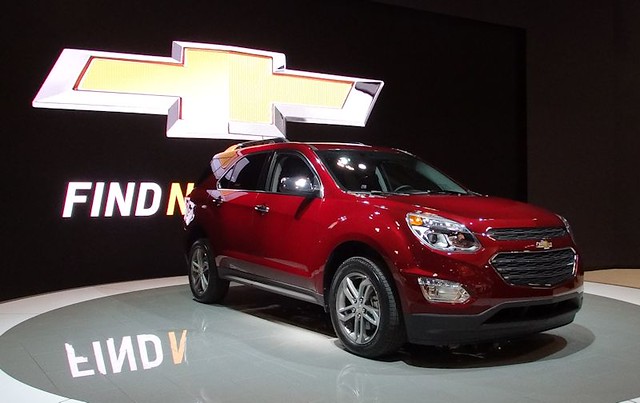
Pledging the continuation of production in Ingersoll, General Motors has announced they will invest $560 million Canadian in the plant in preparations to build the redesigned 2016 Equinox (the crossover's debut coincided with the funding commitment). The investment will see $190 million directed into equipment and tooling for CAMI Assembly Plant while the remainder is slated for vendor tooling with Canadian suppliers. The over half-billion-dollar plan follows a 2013 plan by General Motors that saw a new body work and flexible manufacturing equipment added to the CAMI Assembly Plant. "These investments, which follow planning and study with our partners, are a further vote of confidence in our employees, our business and our future in Ontario and Canada." said General Motors of Canada president and managing director Steve Carlisle.
This announcement extending production of General Motors products in Canada was immediately greeted warmly by provincial and federal governments. “This welcomed investment underscores GM's confidence in Ontario as a global leader in automotive manufacturing, and a great destination for building the next generation Chevrolet Equinox." said the Ontario's Minister of Economic Development, Employment, and Infrastructure Brad Duguid. Canada's Industry Minister James Moore replied to the auto company's commitment saying, "We are pleased to see General Motors securing its future in Southern Ontario." speaking highly on the highly-skilled workforce and low corporate taxes in the country.
As has been the case with the currently-sold Chevrolet Equinox, production for the 2016 crossover is slated to be shared with the CAMI Assembly Plant, Oshawa Assembly Plant and an assembly complex in Spring Hill, Tennessee.
Comments
Post a Comment